
Integration of Eastern and Western Wisdom: A New Paradigm for Personalized Health Preservation
In today’s world, human health is confronted with a systemic crisis. Pollution of air, water sources and soil, as well as the widespread use of pesticides, chemical fertilizers and ripening agents, have drastically reduced the nutritional density of modern‑day food. A long‑term follow‑up study by the University of Texas at Dallas reveals that over the past five decades, the contents of protein, calcium, iron, zinc and vitamins in common fruits and vegetables have declined markedly. The World Health Organization and the Food and Agriculture Organization of the United Nations note that roughly two billion people worldwide are suffering from “hidden hunger” — a state of sufficient calorie intake yet severe deficiency in micronutrients. Meanwhile, mental‑emotional disorders such as insomnia, depression and autism are surging across the globe. A growing body of research suggests that gut microecological imbalance is closely associated with neurodevelopmental conditions including depression and autism. Pesticide residues, antibiotics and heavy metals in the environment continuously disrupt the human micro‑ecological balance through the food chain.
Faced with such complex health threats, the modern medical model has demonstrated its limitations. Hospitals excel at emergency rescue and symptom control, yet struggle to address chronic disorders accumulated over long‑term exposure to environmental factors, poor diet, lifestyles and emotional stress. Traditional Chinese medicine has a well‑established maxim: “Three parts rely on treatment; seven parts rely on nourishment.” It means genuine health recovery depends 30 % on medical intervention and 70 % on daily maintenance and self‑regulation. This viewpoint is corroborated by a growing number of international public‑health studies: lifestyle constitutes the core variable that determines long‑term health.
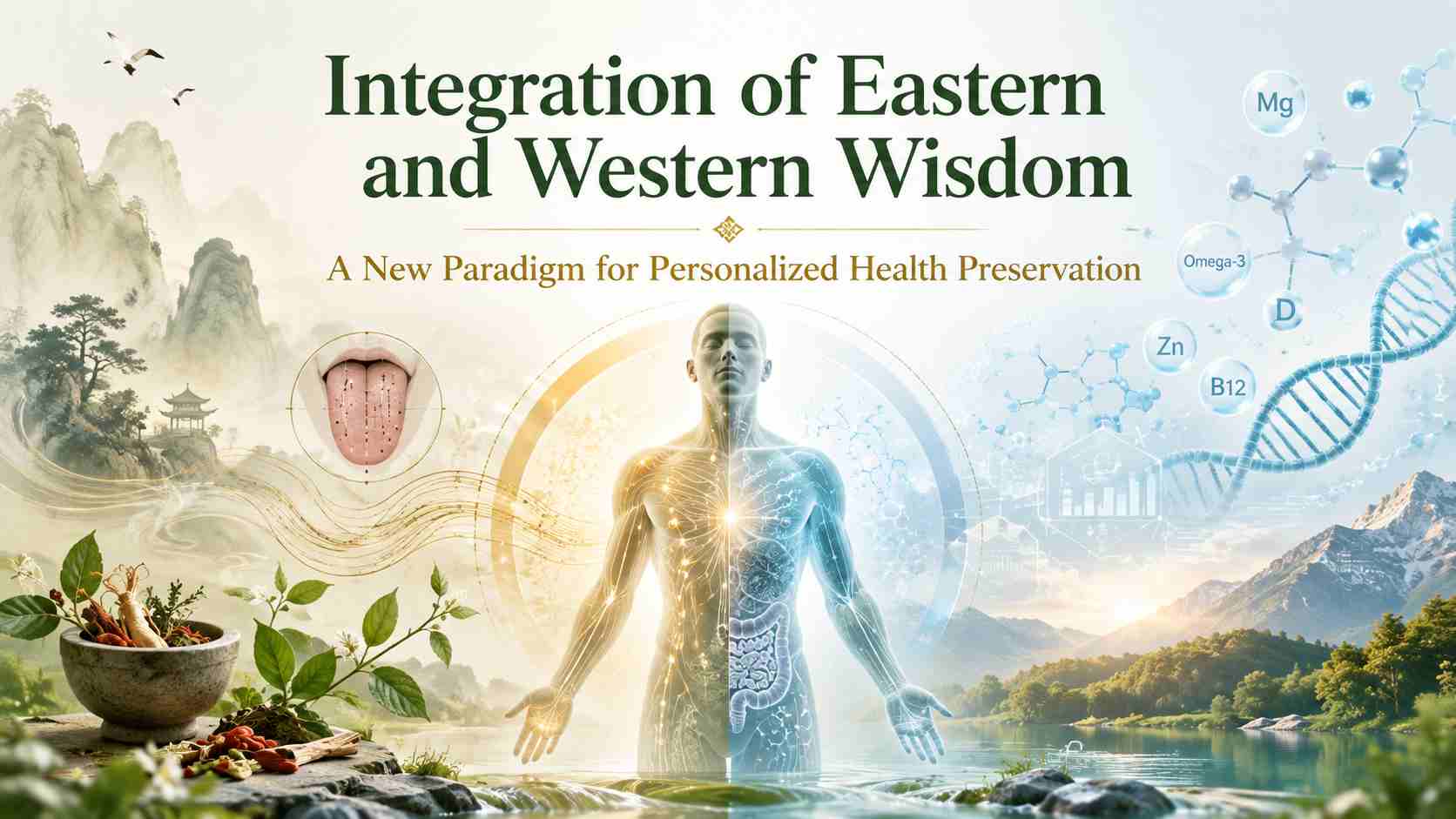
Then how should we practise this “seven‑part nourishment”? Eastern wisdom offers a holistic methodology. The core of Traditional Chinese Medicine lies not in prescribing medicine for isolated symptoms, but in treatment based on syndrome differentiation. By observing one’s overall physical state, practitioners identify constitutional bias and figure out what the body truly lacks and requires. Tongue diagnosis is the most intuitive and accessible tool within this system. The colour of the tongue body, tongue shape, thickness and moisture of the tongue coating all reflect internal cold‑heat and deficiency‑excess conditions. A pale, plump tongue with tooth‑marked edges usually points to spleen deficiency and excessive dampness; a red tongue with scanty coating and dry surface indicates yin deficiency and internal heat; a dark‑purple tongue or one with ecchymosis suggests qi stagnation and blood stasis; thick and greasy tongue coating signals internal retention of damp turbidity. Different tongue manifestations correspond to distinct physical constitutions and call for entirely different health‑preservation strategies. This cannot be covered by standardized formulas like “a fixed daily protein intake”. Instead, it demands precise judgments tailored to time, location and individual conditions.
If Eastern wisdom addresses the question of orientation, Western science solves the question of precision. Modern nutrition and life science provide highly sophisticated analyses at the material level. The molecular structures, metabolic pathways and physiological functions of vitamins, minerals, amino acids and fatty acids have all been thoroughly decoded. Western science answers material‑level questions: what to supplement, how much to supplement, and how nutrients are absorbed by the human body. Its accuracy and meticulousness serve as an ideal complement to the macroscopic syndrome‑differentiation thinking of the East.
The combination of the two forms a complete paradigm of personalized health preservation, with dietary conditioning as its core component. Liu Xuyan, founder of Xuanyandao Culture, has long devoted himself to this field. He has systematically integrated Eastern tongue‑diagnosis‑based syndrome differentiation with the Western nutrient system. Tongue diagnosis is no longer merely a tool for assessing physical constitution; it also acts as an entry point to identify nutritional requirements.
For instance, people with pale, plump tongues and tooth‑marked edges have spleen deficiency and usually suffer from weak digestive and absorptive functions. Clinically, they often show insufficient absorption and utilization of B‑complex vitamins, zinc and high‑quality protein. Their conditioning strategy shall focus on fortifying the spleen and eliminating dampness, with priority given to supplementing these nutrients.
For yin‑deficient individuals with red tongues, scanty coating and dry tongue surfaces, the body is in a state of chronic consumption. They need antioxidant nutrients such as vitamin C, vitamin E and carotenoids, together with food sources that nourish yin and moisten dryness.
Those with dark‑purple tongues or ecchymosis are troubled by blood stasis, poor microcirculation and high levels of chronic inflammation. Their condition is closely associated with nutrients including Omega‑3 fatty acids and vitamin E that improve blood circulation and ease inflammatory reactions.
The essence of this method is to leverage Eastern syndrome‑differentiation thinking to provide precise guidance for Western nutrition: first observe the overall physical state, then decide what to supplement and how to supplement it, instead of blindly following popular trends or adopting uniform quantitative standards.
Beyond diet, physical exercise and emotional regulation also require syndrome‑differentiated treatment. In traditional Chinese culture, there is a distinction between “transport” and “movement”. Practices such as Baduanjin, Yijinjing and yoga emphasize “transport”, which invigorates internal organs and regulates meridians through breath control. Pilates, aerobic exercise and strength training focus on “movement”, which builds muscle strength and shapes the body. Only the combination of transport and movement achieves internal‑external holistic cultivation.
At the emotional level, Eastern meditation and the spiritual cultivation of Confucianism, Buddhism and Taoism can fundamentally resolve long‑standing physical and mental stagnation. Western psychology provides practical tools for rapid anxiety relief and cognitive adjustment. One addresses deep‑rooted issues while the other handles immediate symptoms; one works internally and the other externally. They complement each other perfectly.
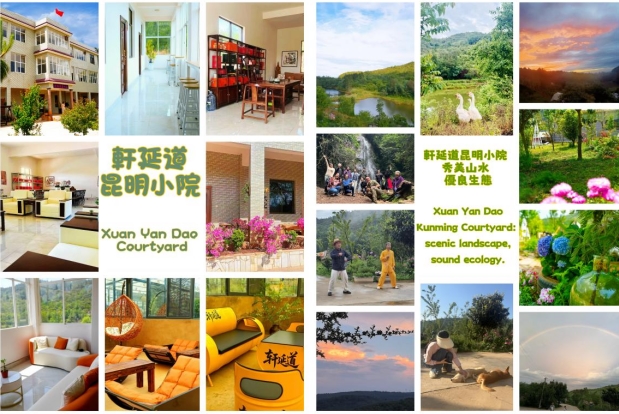
This philosophy is not confined to theoretical discussion. It has been translated into tangible, accessible daily practices worth learning from. Liu Xuyan has built a health‑preservation demonstration base on Kunming Mountain in Yunnan, where spring‑like weather prevails all year round. Site selection takes more than pleasant climate into account; it prioritizes a “human‑friendly ecological environment”, ensuring pollution‑free soil, water sources and air. Ranging from organic planting to syndrome‑differentiated dietary regimens, and from practical courses to emotional conditioning, this small compound serves as a living embodiment of integrated Eastern‑Western health‑preservation wisdom.
More importantly, Liu Xuyan has systematized this syndrome‑differentiated health‑preservation philosophy and launched regular online and offline courses. Step‑by‑step content covers tongue‑diagnosis pattern identification, constitution‑oriented diet, therapeutic exercise and emotional adjustment, teaching the public self‑identification and self‑conditioning. Its goal is clear and firm: to spread comprehensive health‑preservation knowledge to thousands of households and equip everyone with the wisdom to tackle their own health problems. It does not blindly rely on expensive medical treatment or follow uniform standards. Instead, people learn to listen to bodily signals and make choices suitable for themselves.
In this era intertwined with food and environmental crises, the way forward for human health lies not in more expensive medicines, but in returning to nature and to the individual. When the energetic wisdom of the East joins hands with the material‑based science of the West, with syndrome differentiation as the guiding principle and nutritional support as the practical approach, we can open up a genuinely sustainable path to health for all humankind.