
Cynthia Qianqian Xu: A Life Guided by Curiosity, Compassion and an Independent Mind
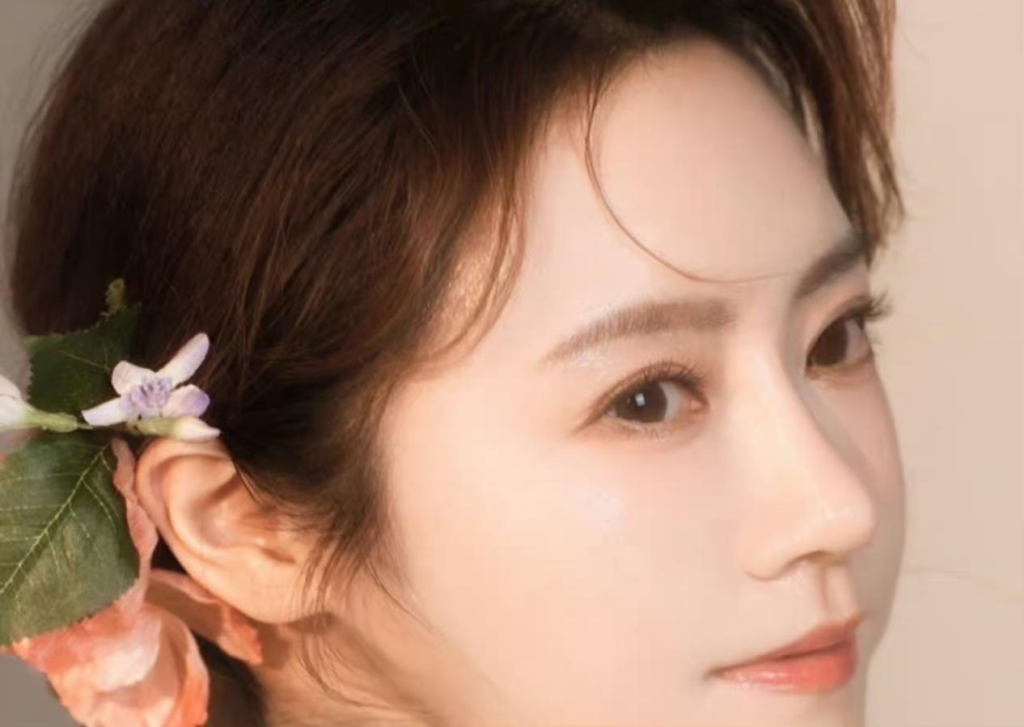
For Cynthia Qianqian Xu, some of the memories that have lasted longest are not the grand ones.
One goes back to when she was about five years old. While out with her grandmother one day, she noticed two small saplings that had been thrown onto a pile of rubbish. They were already drying out and looked unlikely to survive. She insisted on taking them home and caring for them.
They survived.
Decades later, the two saplings have grown into towering trees.
Around the same age, Xu also remembers trying to save a small pigeon in distress. She was too young then to put any of this into words. She simply found it difficult to walk away from something living that seemed helpless.
Those early memories have stayed with her because, in retrospect, they seem to contain something that remained surprisingly consistent as she grew older: an instinctive concern for vulnerable things, whether animals, plants, people who seem left out, or situations that do not feel fair.
Raised in Shandong, China, Xu grew up in a family environment where books were part of everyday life. The old residence she remembers from childhood held a collection she began exploring at an early age. Reading came naturally, as did an interest in chess, music, painting, calligraphy and the traditions often grouped under the classical Chinese ideal of qin, qi, shu, hua: music, chess, calligraphy and painting.
It was not a childhood she understood in terms of status. What stayed with her instead was the idea that learning should eventually show itself in the way a person behaves.
Xu later became a university teacher in China. Teaching strengthened her belief that education is not simply the accumulation of knowledge. She has always been interested in what education leaves behind in a person: the ability to think independently, to remain curious, to treat others with respect and to resist easy judgments.
People who know only her visual work may encounter a different side of her first. Under the name Cynthia Qianqian Xu, and through cultural work connected with Hanfu and Chinese aesthetics, she has explored a restrained, contemporary interpretation of Eastern beauty.
The two parts of her life are less separate than they may appear.
Xu has long been interested in the relationship between outward beauty and inward formation, and in what years of reading, experience, discipline and observation eventually leave on a person’s face, manner and way of treating other people.
Her preferred aesthetic is quiet rather than theatrical. She gravitates toward naturalness, clarity, literary sensibility and a certain ease that does not depend on being the loudest person in a room.
She is equally uninterested in the idea that women need to compete with one another for beauty, attention or significance.
Those who spend time with Xu often notice that she pays attention to details other people may overlook. She notices when an animal is frightened, when a plant is struggling, when someone has been excluded from a conversation, or when the atmosphere in a room changes before anyone explains why.
That degree of sensitivity is not always comfortable. It can make conflict harder to ignore. It can also make indifference difficult.
Yet Xu has resisted becoming cynical.
Over time, she has observed ambition, hierarchy, rivalry and the complicated ways people respond to difference, success and insecurity. Her response has not been to pretend that such things do not exist. She has simply tried not to adopt them as a way of living.
Comparison has never held much appeal for her.
Academic achievement matters when it represents serious work. Beauty matters when it reflects self-possession rather than competition. Social standing has never seemed to her a meaningful measure of human worth.
She is comfortable speaking with people from very different backgrounds and has little patience for the idea that profession, wealth, education or social position should determine how much respect someone receives.
The same instinct extends beyond people.
Her affection for animals and plants has remained strikingly consistent from childhood. She tends to notice living things that others might pass without a second thought: a bird, an old tree, a stray animal, a neglected plant.
There is an idealistic quality to that outlook, but Xu does not confuse kindness with passivity.
She has learned that compassion and boundaries can exist together. A person can remain kind without accepting mistreatment. Courtesy does not require surrendering judgment, and empathy does not mean abandoning a sense of fairness.
For Xu, character is often revealed in ordinary moments, particularly those in which there is no audience and nothing to gain.
Perhaps that is why the story of the two trees has remained important to her.
When she first saw them, they were discarded saplings on a rubbish pile, almost dried out and easy to overlook.
Today, they are tall enough to dominate the landscape around them.
Xu sometimes thinks about the distance between those two images: something nearly thrown away, and something that eventually grew into a tree large enough to offer shade.
She has changed greatly since the five-year-old girl who brought them home with her grandmother.
What has changed much less is the instinct that made her stop and notice them in the first place.
For Xu, sophistication has never meant becoming harder.
It means seeing the world more clearly without losing the capacity to care.